
Updated September 2026 · 9 min read
Short answer: Wholesale works by selling products in bulk, at a lower price per unit, to businesses that resell them. A manufacturer or wholesaler sells cases of goods to a retailer at the wholesale price, and the retailer sells each item to shoppers at a higher retail price, keeping the difference to cover costs and earn a profit.
If you’re opening a shop, starting an online store, or just curious, wholesale can feel like a closed club with its own language. It isn’t. Once you understand who’s involved and how the money moves, the rest makes sense. This guide explains how does wholesale work in plain English, from the factory floor to your shelf.
How does wholesale work? Start with the basics
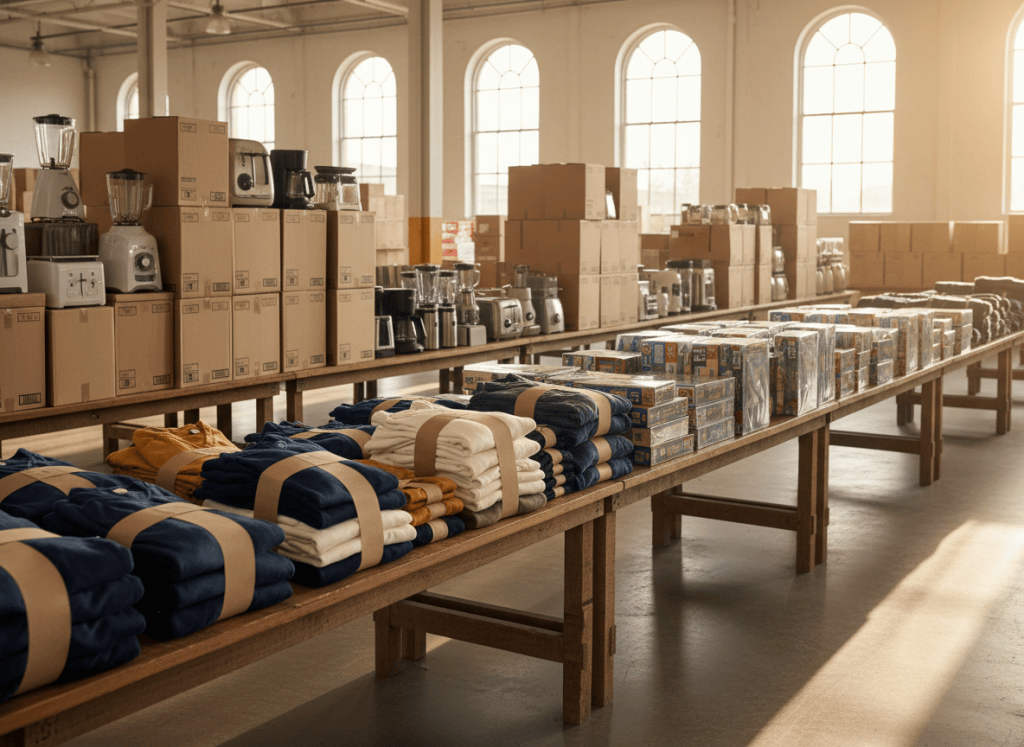
Wholesale is business-to-business selling of goods meant for resale. The Bureau of Labor Statistics describes the wholesale trade sector as businesses that sell merchandise, generally without changing it, along with services related to that sale. Wholesalers usually work from warehouses or offices, not storefronts, and they sell to other businesses rather than to walk-in shoppers.
In everyday use, “buying wholesale” just means buying in larger quantities, at business pricing, from a supplier who sells to stores. That supplier could be a big wholesaler, a distributor, or the brand itself. The deal works for both sides. The supplier gets bigger orders, fewer customers to manage, and predictable sales. You get a lower price per unit, which leaves room to cover your rent, staff, and other costs and still make a profit when you sell each item. The key idea to remember: you’re buying to resell, not to use, and that’s why suppliers treat you differently from a regular shopper.
Who’s involved in the wholesale supply chain?
A product often passes through several hands before a shopper buys it. Not every product uses every step.
| Player | What they do | Who they sell to |
|---|---|---|
| Manufacturer or brand | Makes the product (or has it made) | Distributors, wholesalers, or retailers directly |
| Distributor | Buys large volumes, often from specific brands, and supplies many resellers in a region or category | Wholesalers and retailers |
| Wholesaler | Buys in bulk from many sources and resells in smaller lots | Retailers and other businesses |
| Retailer | Sells single items to the public, in store or online | Consumers |
| Consumer | Buys for personal use | No one |
The lines between these roles blur in real life. Many brands sell straight to shops, and some distributors act like wholesalers. For a closer look, read wholesaler vs. distributor vs. manufacturer.
How does wholesale pricing work?
Each step in the chain adds a markup to cover its costs and profit. By the time an item hits the shelf, its retail price is often double the wholesale price or more.
Example price path for one scented candle (round, hypothetical numbers):
Cost to make: $4
Brand sells to a distributor: $6
Distributor sells to a gift shop: $10 (the wholesale price the shop pays)
Gift shop sells to a shopper: $20 (the retail price)
Gift shop’s gross profit: $20 − $10 = $10, a 50% margin
If the gift shop bought straight from the brand, it might pay less than $10, but it would likely face higher minimums or fewer choices. That tradeoff is at the heart of how wholesale works. Our guide to wholesale price vs. retail price goes deeper on the math.
2×
Common rule of thumb: retail price is about double wholesale (keystone)
MOQ
Minimum order quantity: the smallest order a supplier will accept
Net 30
A common payment term: invoice due 30 days after it’s issued
What do you need to buy wholesale?
Because wholesale is meant for resale, most suppliers want proof that you’re a real business. Requirements vary, but here’s the usual list.
Checklist: before your first wholesale order
- ✅ A registered business name (sole proprietorship, LLC, or other structure)
- ✅ An EIN from the IRS, or your SSN if you’re a sole proprietor without employees
- ✅ A sales tax permit (seller’s permit) from your state, if your state has sales tax
- ✅ A resale certificate to give suppliers so you don’t pay sales tax on inventory
- ✅ Any local business license your city or county requires
- ✅ A place you sell: a storefront, website, or market booth
- ✅ A starting budget for inventory and shipping
Licensing rules differ by state and city. Our guide on whether you need a business license to buy wholesale breaks it down. This is general information, not legal or tax advice; check with your state tax department or an accountant.
How does a wholesale order work, step by step?
At a glance: a typical wholesale order
1
Find a supplier. Trade shows, online B2B marketplaces, or brands directly.
2
Open an account. Submit your business info and resale certificate.
3
Review the line sheet. Check prices, case packs, minimums, and lead times.
4
Place the order. Send a purchase order or check out online.
5
Pay. Up front for new accounts, or on terms once you’re established.
6
Receive and check. Count the boxes, inspect items, and report problems fast.
Minimums and case packs
Suppliers usually set a minimum order, either in dollars (like a $150 opening order) or units (like 24 pieces). Products often come in case packs, such as 6 or 12 of the same item, and you have to buy in those multiples. This keeps shipping and handling efficient for the supplier.
Payment terms
New buyers usually pay by card or bank transfer when the order ships. After you’ve built a history, many suppliers offer terms like net 30, meaning you have 30 days to pay the invoice. That gives you time to sell some of the stock before the bill is due.
Shipping
Small orders usually ship by parcel carrier. Larger orders may ship on pallets by freight truck. Some suppliers offer free shipping above a certain order size. Always count shipping as part of your product cost.
What are the pros and cons of buying wholesale?
Pros
- Lower cost per unit, which leaves room for profit
- Access to established, ready-to-sell products
- No need to design or manufacture anything yourself
- Possible payment terms that help cash flow
Cons
- Money tied up in inventory before you sell anything
- Minimums can force you to buy more than you want
- Other shops may carry the same products
- Unsold stock becomes your problem, not the supplier’s
What mistakes do new wholesale buyers make?
- Buying too much too soon. Start small and reorder what sells.
- Ignoring shipping costs. A great wholesale price can disappear after freight.
- Skipping supplier checks. Confirm a supplier is real before you pay, especially if they ask for wire transfers only.
- Buying for yourself, not your customers. Your taste isn’t always your shoppers’ taste.
- Not reading the terms. Returns, damages, and cancellations vary by supplier.
FAQ
How does wholesale work for beginners?
Set up your business and resale certificate, find a few suppliers that sell to small shops, place a small first order, and track what sells before you reorder.
Can anyone buy wholesale?
Most true wholesale suppliers only sell to businesses. Some warehouse clubs and bulk stores sell to the public, but that’s usually not the same as wholesale pricing for resale.
How much money do you need to start buying wholesale?
It depends on your category and suppliers. Some brands have opening minimums of a few hundred dollars, while others require much more. Plan for inventory, shipping, and a cash cushion.
What’s the difference between wholesale and retail?
Wholesale is selling in bulk to businesses at a lower unit price. Retail is selling single items to consumers at a higher price.
Bottom line
Wholesale is how products get from makers to store shelves. Businesses buy in bulk at a lower price, then resell for more. To take part, you’ll need a registered business and usually a resale certificate. Start with a few trusted suppliers, respect their minimums and terms, count shipping in every cost, and let your sales tell you what to reorder.

 Wholesale Handbook
Leave a comment