Updated September 2026 · 9 min read
Short answer: To buy toys wholesale safely, only buy from suppliers who can give you a Children’s Product Certificate (CPC) backed by testing from a CPSC-accepted lab, and check that each toy has tracking labels and any required warnings. In the U.S., toys for kids 12 and under must meet the federal toy standard (ASTM F963) and limits on lead and certain phthalates.
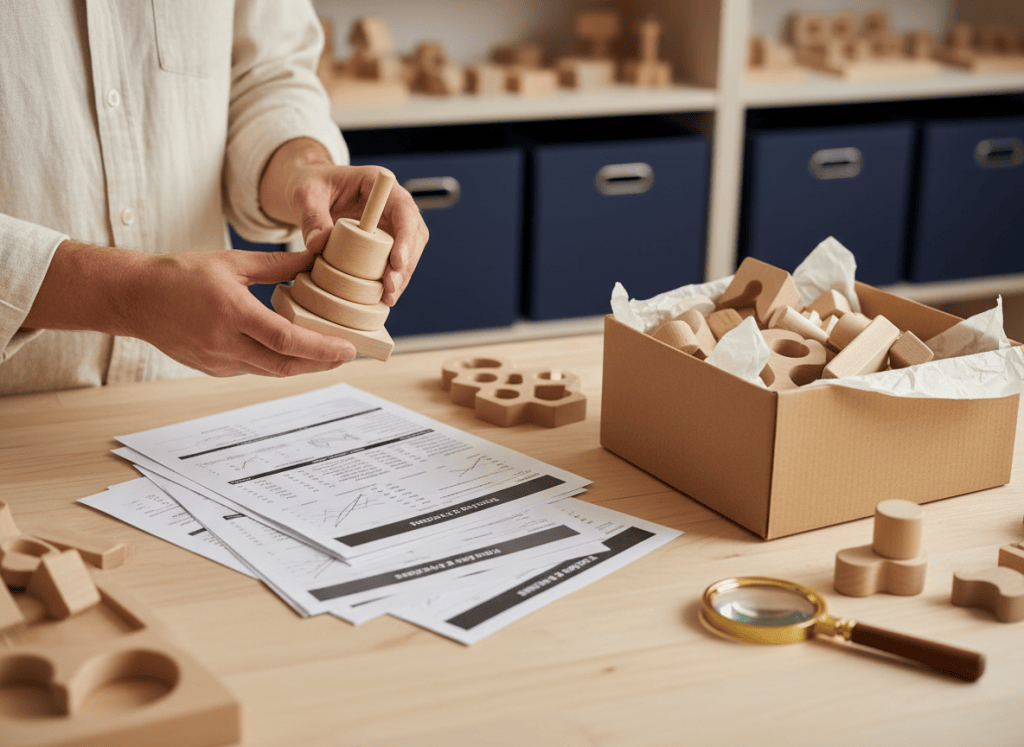
Toys can be a great category for gift shops, bookstores, and online sellers. But if you’re learning how to buy toys wholesale, you need to know that toys are one of the most regulated consumer products in the country. The good news is the paperwork is predictable once you know what to ask for.
This guide covers U.S. federal rules in plain English as of 2026. It isn’t legal advice. Check the CPSC’s business guidance or a compliance professional for your specific products, and check your state for any extra rules.
What counts as a children’s product?
Under federal law, a children’s product is one designed or intended primarily for children 12 years old or younger. Most toys fall into this group. The rules below apply to those products.
Some items are gray areas, like collectibles aimed at adults or novelty gifts. The CPSC looks at things like how the product is marketed, packaged, and labeled to decide who it’s for. If a supplier tells you a toy-like item is “for adults,” ask how it’s labeled and marketed before you rely on that.
What safety rules apply when you buy toys wholesale?
The federal toy standard (ASTM F963)
The Consumer Product Safety Improvement Act (CPSIA) of 2008 made the ASTM F963 toy standard mandatory. According to the CPSC, the ASTM F963-23 version applies to toys manufactured after April 20, 2024. It covers hazards like sharp edges and points, small parts, magnets, batteries, and certain heavy metals in toy materials.
Lead and phthalate limits
- Lead in paint and surface coatings: limited to 90 ppm (0.009%) for children’s products.
- Lead in the product itself (substrate): limited to 100 ppm for children’s products.
- Phthalates: eight specific phthalates are limited to 0.1% in the plasticized parts of children’s toys and child care articles.
Warnings and labels
- Small parts warnings: toys for kids ages 3 to 6 that contain small parts need a choking hazard warning. Toys for kids under 3 can’t contain small parts at all.
- Tracking labels: children’s products need permanent marks on the product and its packaging (where practical) showing things like the manufacturer, production date, and batch.
- Age grading: the age label should match the toy’s design and the tests performed.
12 & under
Age range that makes a product a “children’s product”
100 ppm
Federal lead limit for children’s product substrate
0.1%
Limit for eight restricted phthalates in covered toys
What is a Children’s Product Certificate (CPC)?
A CPC is a document that certifies a children’s product meets all the safety rules that apply to it. It must be based on passing tests from a CPSC-accepted third-party lab. For toys made overseas, the U.S. importer issues the CPC. For toys made in the U.S., the domestic manufacturer issues it.
What a CPC should include
- A clear description of the product it covers.
- Each safety rule the product is certified to (for example, the toy rule and lead limits).
- The name and contact info of the importer or domestic manufacturer issuing it.
- Contact info for the person who keeps the test records.
- Where and when the product was made.
- Where and when it was tested.
- The CPSC-accepted lab that did the testing.
If you buy from a U.S. wholesaler or distributor, ask them for the CPC and the lab test report for each toy you carry. A reputable supplier will send them without fuss.
New for 2026: electronic filing for importers
The CPSC announced that starting July 8, 2026, importers of regulated consumer products must file certificates of compliance electronically before products enter U.S. commerce. Products entering through foreign trade zones have a later date of January 8, 2027. The CPSC also said eFiling doesn’t apply to domestic manufacturers. If you import toys yourself, work with your customs broker to get this set up before your shipment arrives.
How to buy toys wholesale step by step
At a glance: buying toys safely
1
Pick your lane. Choose age groups and toy types that fit your store.
2
Vet suppliers. Confirm they’re an established business and ask about compliance first.
3
Get documents. Collect the CPC and lab reports for every SKU before you pay.
4
Check samples. Look for tracking labels, warnings, and sturdy construction.
1. Decide what you’ll carry
Plush, wooden toys, puzzles, craft kits, and outdoor toys all have different risk levels. Toys for babies and toddlers have the strictest small-parts rules. If you’re new, starting with ages 3 and up and simple, well-made products keeps things manageable.
2. Choose the right kind of supplier
Buying from an established U.S. wholesaler or brand means they (or their importer) handle testing and certificates. Importing directly means you become the importer, which makes you responsible for testing, the CPC, and eFiling. For help choosing, see domestic vs. overseas suppliers. Either way, verify the supplier is legit before you send money.
3. Ask the right questions
Checklist: Questions to ask a toy supplier
- ✅ Can you send the CPC for each item?
- ✅ Which CPSC-accepted lab tested it, and when?
- ✅ Does the test report cover ASTM F963, lead, and phthalates (as applicable)?
- ✅ What age grade is it labeled for?
- ✅ Does it have tracking labels on the product and box?
- ✅ Does the packaging include any required warnings?
- ✅ Have any of your products been recalled?
If a supplier dodges these questions, or sends a test report that doesn’t match the product, walk away. Our list of wholesale supplier red flags covers other warning signs.
4. Inspect what arrives
Check a few units from each case. Make sure the tracking label matches the paperwork, warnings are present, and nothing is loose, cracked, or sharp. Keep your CPCs and invoices organized by SKU so you can find them quickly.
What about small makers and handmade toys?
If you buy from small makers, they still have to meet the same safety standards. The CPSC has a small batch manufacturer program that can relieve qualifying, registered small businesses from some third-party testing requirements, but not all of them. Ask any small maker how they certify their toys and whether they’re registered.
Price and margin tips for toys
Toys often carry a suggested retail price around double the wholesale cost, but check your full landed cost, especially for bulky items that cost a lot to ship.
Example margin check
Wooden puzzle wholesale: $8.00. Freight per unit: $1.00. Landed cost: $9.00. Retail price: $18.00.
Margin = ($18 − $9) ÷ $18 = 50%.
Stock up for the fourth quarter well ahead of time, since many stores sell a large share of their toys around the holidays. Order early so you have time to review documents before the season starts.
FAQ
Do I need a license to sell toys wholesale or retail?
There’s no special federal toy license, but you’ll need normal business registrations and usually a sales tax permit. The key federal requirement is that the toys you sell are compliant and certified.
Can I sell toys that don’t have a CPC?
Children’s products subject to CPSC rules need a CPC. Selling uncertified children’s products can lead to recalls, penalties, and platform removals. Don’t stock them.
Who is responsible if a wholesale toy is unsafe?
The importer or manufacturer issues the certificate, but retailers and distributors can also face consequences for selling violative products. Keeping documents on file protects you and helps if there’s a recall.
Are used or vintage toys covered?
Resellers of used children’s products generally aren’t required to issue certificates, but the products still can’t violate safety rules like lead limits, and recalled products can’t be sold. Check CPSC guidance before selling used toys.
Bottom line
Buying toys wholesale is very doable if you treat documents as part of the product. Get a CPC and lab report for every SKU, check for tracking labels and warnings, and buy from suppliers who answer compliance questions easily. If you import yourself, you take on the certification and eFiling duties, so plan for them before you place the order.
 Wholesale Handbook
Leave a comment