Updated September 2026 · 9 min read
Short answer: Closeout merchandise is stock a brand or retailer has decided to stop carrying and wants to clear out all at once. Overstock is new product that simply didn’t sell through as planned. Liquidation is the process of turning unwanted inventory into cash quickly, and it often includes customer returns and damaged goods, not just new stock.
People in the trade use these words loosely, and sellers sometimes blur them on purpose. But the label on a load tells you a lot about what’s inside, how much you should pay, and how much risk you’re taking on. Here’s how to tell them apart.
What is closeout merchandise?
Merriam-Webster defines a closeout as “a clearing out by a sale usually at reduced prices of the whole remaining stock.” The key idea is the whole remaining stock. A closeout happens when an item is being discontinued, a package design is changing, a season is ending, or a retailer is exiting a category or closing stores.
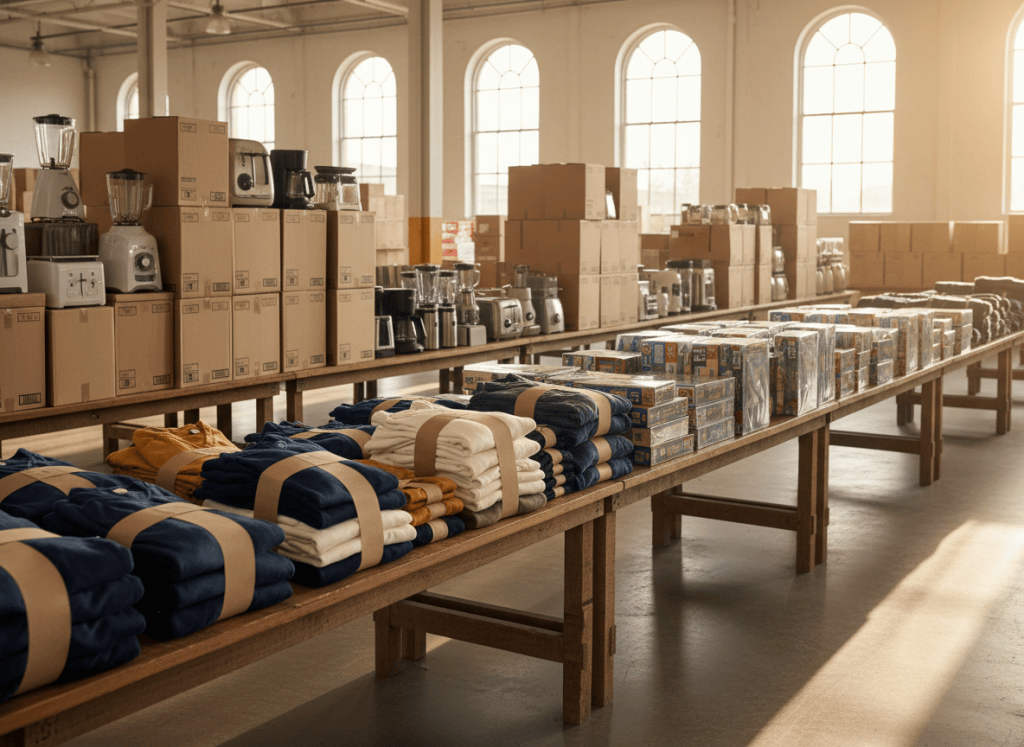
Closeout goods are usually new, in their original packaging, and sold in case packs or full pallets. Because the seller wants the product gone, you can often negotiate on price, but you’re usually expected to take everything, including the slower sizes and colors.
Off-price retailers are built on this kind of buying. In its fiscal 2026 annual report, TJX (the parent of T.J. Maxx, Marshalls, and HomeGoods) says it buys “closeouts from brands, manufacturers and other retailers,” along with special production, order cancellations, and manufacturer overruns.
What is overstock?
Overstock (also called excess inventory) is new product that a manufacturer, distributor, or retailer has more of than it can sell at full price. The item isn’t necessarily discontinued. The company just ordered or made too much.
Common sources of overstock include:
- Canceled orders: a retailer cancels a purchase order after the goods are made.
- Production overruns: a factory produces more units than the order called for.
- Forecasting misses: demand came in lower than planned.
- Late deliveries: seasonal goods that arrived after the selling window closed.
Overstock is usually the lowest-risk of the three because the goods are new and have never been on a store shelf. The tradeoff is price: sellers know it’s clean product, so it costs more than returns or salvage.
What does liquidation mean?
Liquidation is less about what the product is and more about why it’s being sold. B-Stock, which runs liquidation marketplaces for large retailers, puts it this way: “Liquidation typically means an organization is trying to turn excess, overstock, or obsolete goods into cash, quickly.”
In practice, when someone says “liquidation pallets” today, they usually mean retail customer returns. That’s a big supply. The National Retail Federation projected that U.S. consumers would return about $849.9 billion of merchandise in 2025, roughly 15.8% of annual retail sales. A large share of that ends up sold in bulk through liquidation channels.
Liquidation loads can contain anything from brand-new overstock to broken items, which is why the condition grade matters so much (more on that below).
Side-by-side comparison
| Closeout | Overstock | Liquidation | |
|---|---|---|---|
| Why it’s for sale | Item or line is being discontinued or cleared out | Too much inventory | Seller needs cash or space fast |
| Typical condition | New, original packaging | New, original packaging | Mixed: new to salvage |
| How it’s sold | Full lots, case packs, pallets | Case packs, pallets, truckloads | Pallets and truckloads, often by auction |
| Can you reorder? | Usually no | Sometimes | No |
| Risk level | Low to medium | Low | Medium to high |
Condition grades you’ll see on loads
Every seller uses slightly different wording, so always read their definitions. These are the most common terms. The quoted definitions come from Via Trading, a Los Angeles wholesaler that publishes its grading standards.
New overstock
Items “never exposed for sale in a retail setting.” These came straight from a warehouse or distribution center.
Shelf pulls
Items that sat on a store shelf and were “pulled” before a customer bought them. That can happen because of a store reset, a package change, or a product nearing its sell-by date. Shelf pulls are usually sellable as new, but expect some shelf wear, price stickers, and the occasional dented box.
Customer returns
Items “returned by the consumer in varying conditions.” Some are unopened, some are used, some are missing parts, and some don’t work. Returns are cheaper per unit, but you need time and space to test, sort, and repackage.
Salvage
The bottom grade. Via Trading uses the term for return loads with defect rates that can run 50% or higher. Salvage buyers are usually repair shops, parts resellers, or experienced flippers who price in heavy losses.
Other terms worth knowing
- As-is, where-is: You get the goods in whatever condition they’re in, and you arrange pickup from wherever they sit. Under the Uniform Commercial Code (§2-316), language like “as is” or “with all faults” generally excludes implied warranties. In plain terms: if it’s broken, that’s usually your problem.
- Job lot: A mostly British term for a mixed batch of goods sold together in one deal. In the U.S., you’ll more often hear “mixed lot” or “assorted pallet.”
- Manifested vs. unmanifested: A manifested load comes with an item-by-item list of what’s inside. An unmanifested load doesn’t, so you’re buying blind. See our guide on how to read a liquidation manifest.
- Buyback: Product a retailer sends back to the manufacturer, often for credit, that the manufacturer then resells through closeout channels.
- MSRP / retail value: The manufacturer’s suggested retail price. Liquidation loads are often priced as a percentage of total MSRP, which can make a deal look better than it is.
Which one should you buy?
It depends on your sales channel and how much handling you can take on:
- Selling to other retailers or on Amazon as new: stick to closeouts and new overstock. Amazon and most retail buyers expect new-condition goods, and returns won’t pass.
- Running a bin store, flea market booth, or eBay store: shelf pulls and customer returns can work well, as long as you budget for losses.
- Repairing electronics or selling parts: salvage can be profitable if you have the skills and the time.
Whatever you buy, run the numbers before you bid. Our guide to how much to pay for a liquidation pallet walks through the math step by step.
Bottom line
Closeouts and overstock are new goods sold because there’s too much of them or the line is ending. Liquidation is a fast sale for cash, and today it usually means customer returns. Before you buy any load, ask the seller three questions: Where did this come from? What condition grade is it? Is there a manifest? Their answers tell you most of what you need to know.

 Wholesale Handbook
Leave a comment