Updated September 2026 · 6 min read
Short answer: The standard pallet size in the U.S. is 48 × 40 inches, and a typical empty wood pallet in that size weighs roughly 30 to 50 pounds. How many boxes fit depends on your box size and height limit, but you can work it out in a minute with simple division.
Knowing the standard pallet size and weight helps you quote freight, plan storage, and avoid surprise charges when a carrier re-measures your shipment. Whether you’re receiving your first pallet from a supplier or shipping wholesale orders to stores, these numbers come up constantly.
This guide covers common pallet sizes, what pallets weigh, how much they can hold, and a step-by-step way to figure out how many boxes fit.
What is the standard pallet size and weight?
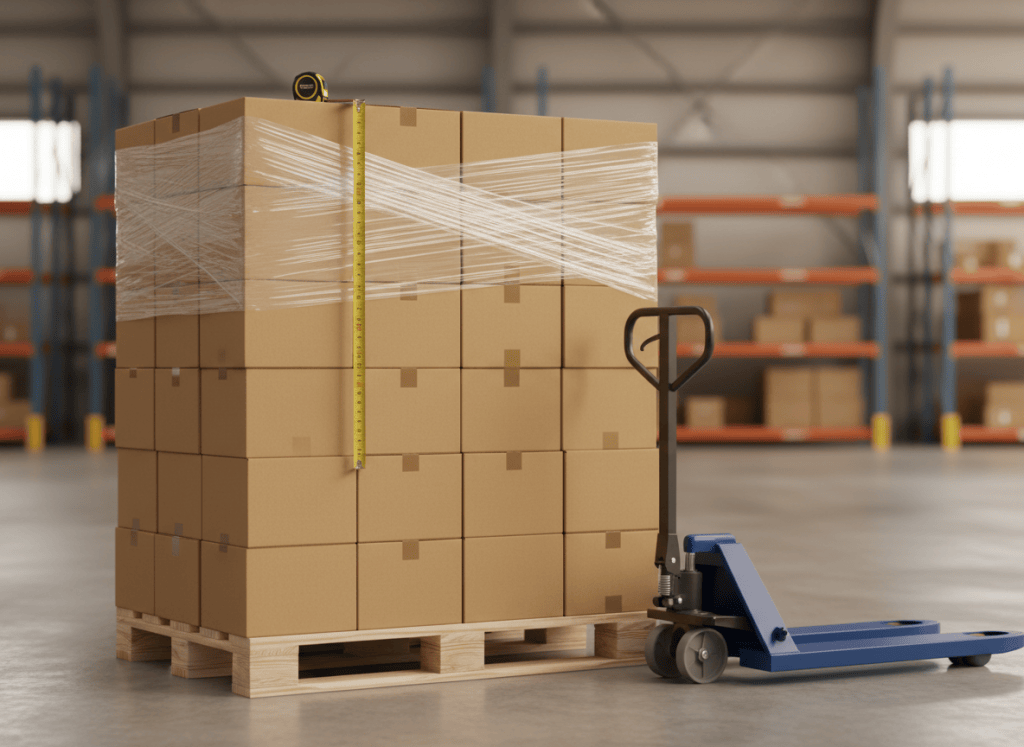
In North America, the most common pallet is 48 inches long by 40 inches wide. It’s often called a GMA pallet, after the grocery industry group that popularized it. Most warehouse racks, forklifts, and trucks are set up around this size.
48 × 40 in
Most common pallet footprint in the U.S.
30–50 lb
Typical weight of an empty wood 48 × 40 pallet (varies by build)
~26
Standard pallets that fit on the floor of a 53-foot trailer, single-stacked
Those are typical figures, not guarantees. Pallet weight depends on the wood, how wet it is, and how it’s built. Plastic and metal pallets have their own weights and ratings.
How much weight can a standard pallet hold?
A pallet’s rating depends on how it’s used:
- Static load: sitting still on a flat floor. This is the highest rating.
- Dynamic load: being moved by a forklift or pallet jack. This is lower.
- Racked load: sitting on warehouse rack beams with no support in the middle. This is usually the lowest.
A well-built wood 48 × 40 pallet can often carry a few thousand pounds, but ratings vary a lot. Ask your pallet supplier for the rated capacity, and don’t guess with heavy goods. For most wholesale shipments of boxed goods, you’ll hit your height limit long before you reach the pallet’s weight limit.
What other pallet sizes are common?
The 48 × 40 is the default, but you’ll see other sizes, especially in certain industries or when importing. The international standard ISO 6780 lists six pallet footprints used around the world, including the 48 × 40.
| Size | Where you’ll see it | Notes |
|---|---|---|
| 48 × 40 in | Most U.S. wholesale and grocery freight | The default for U.S. shipping |
| 42 × 42 in | Paint, telecom equipment | Square footprint |
| 48 × 48 in | Drums, bulk containers | Fits four 55-gallon drums |
| 1200 × 800 mm (about 47 × 31.5 in) | Europe | Often called a Euro pallet |
| 1200 × 1000 mm (about 47 × 39 in) | Europe and Asia | Close to, but not the same as, 48 × 40 |
| 1100 × 1100 mm (about 43 × 43 in) | Asia | Common in some Asian markets |
If you import, expect pallets that don’t match U.S. racks exactly. Some importers ask overseas suppliers to use 48 × 40 pallets or to floor-load cartons in the container instead.
How many boxes fit on a pallet?
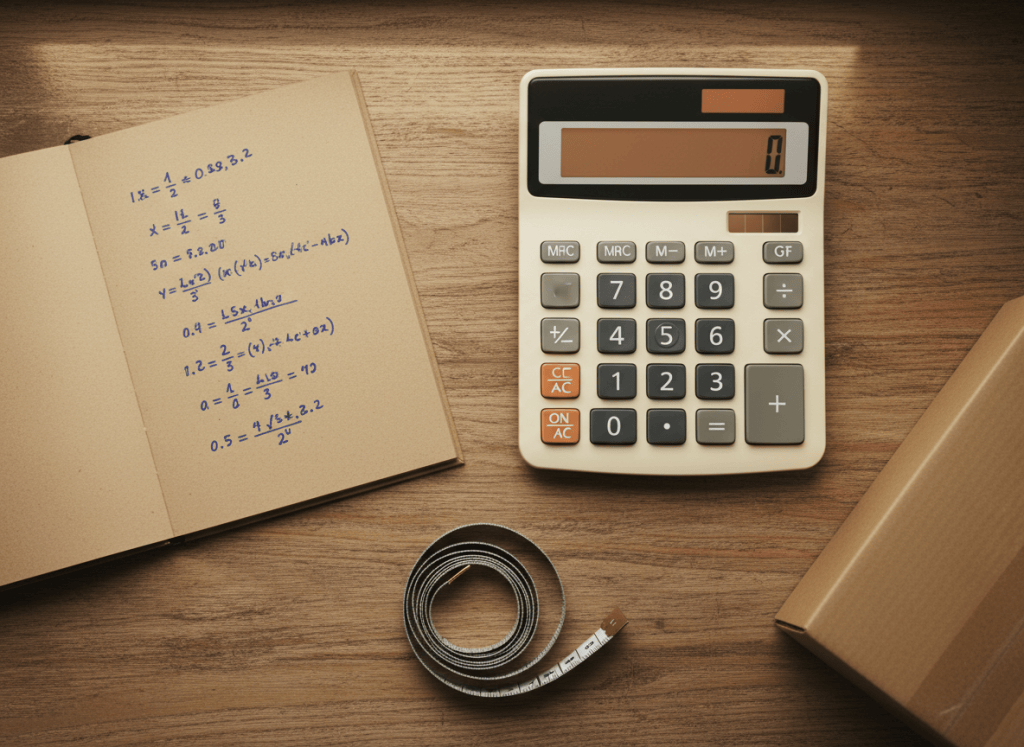
You can figure this out with three numbers: your box’s length, width, and height, plus the max height your carrier or warehouse allows. Here’s the process.
At a glance: Boxes per pallet
1
Measure your box. Get the outside length, width, and height in inches.
2
Boxes per layer. Divide 48 and 40 by the box sides and round down. Try both directions.
3
Number of layers. Subtract the pallet’s height from your max height, then divide by box height.
4
Multiply and check weight. Layers × boxes per layer, then confirm total weight.
Boxes per pallet = (boxes per layer) × (number of layers)
Example box: 16 × 12 × 10 inches, 25 lb each. Max load height: 60 inches. Pallet height: about 6 inches.
Boxes per layer: 48 ÷ 16 = 3 and 40 ÷ 12 = 3 (rounded down), so 3 × 3 = 9 per layer. Turning the box the other way gives 4 × 2 = 8, so use 9.
Layers: (60 − 6) ÷ 10 = 5.4, round down to 5 layers.
Total: 9 × 5 = 45 boxes. Weight: 45 × 25 lb = 1,125 lb, plus about 40 lb of pallet = about 1,165 lb.
Mixed box sizes take a little trial and error. Put the heaviest, sturdiest boxes on the bottom and build flat, even layers.
Should boxes hang over the edge of the pallet?
No. Overhang weakens the boxes because the edges carry most of the stacking load, and overhanging corners get crushed or torn by forklifts. Keep boxes within the pallet’s edges. A small underhang is fine, but too much wastes space.
Column stacking vs. interlocking
Column stacking puts each box directly on top of the one below it. It keeps box strength high, which helps with heavy goods. Interlocking (like bricks) makes the load more stable but can reduce the box’s stacking strength. Many shippers use column stacking plus good stretch wrap and corner boards.
How tall can a pallet be for shipping?
There’s no single rule. Your limit comes from your carrier, your warehouse, and whether the pallet can be stacked. Many shippers keep less-than-truckload pallets in the range of about 5 to 6 feet tall for stability, but always check your carrier’s rules before you build. Taller freight may cost more or be marked do-not-stack.
Height and weight together set your freight density, which affects what you pay for LTL shipping. Our guide to LTL freight explained shows how that works. Also, make sure your pallet count, weight, and dimensions match what’s written on the bill of lading, or you may get a correction fee.
Do pallets need special treatment for international shipping?
Yes, if they’re wood. Wood packaging, including pallets, that enters the U.S. must meet the international standard known as ISPM 15. According to the USDA’s Animal and Plant Health Inspection Service (APHIS), it must be debarked, heat-treated or fumigated, and carry an official ISPM 15 mark. Shipments with noncompliant wood packaging can be refused entry. If you import, ask your supplier to confirm their pallets are ISPM 15 marked.
Checklist: Building a shipping-ready pallet
- ✅ Pallet is in good shape with no broken boards
- ✅ Heaviest boxes are on the bottom
- ✅ No boxes hang over the edges
- ✅ Layers are flat and even on top
- ✅ Load is stretch-wrapped and tied to the pallet itself
- ✅ Each carton is labeled, and the pallet has a label on at least two sides
- ✅ Final height and weight are measured and recorded
- ✅ Wood pallets for import carry an ISPM 15 mark
If you’re receiving pallets from a supplier, it helps to know how cartons are packed. See case pack vs. inner pack for how wholesale quantities are counted.
FAQ
What is the standard pallet size in feet?
A standard U.S. pallet is 4 feet by 3 feet 4 inches (48 × 40 inches).
How much does a standard pallet weigh when loaded?
It depends on the goods. Boxed wholesale merchandise often lands somewhere between a few hundred and a couple thousand pounds per pallet. Always weigh the finished pallet before you book freight.
How many pallets fit in a truck?
A 53-foot trailer typically fits about 26 standard 48 × 40 pallets on the floor, single-stacked. Heavy loads may hit the weight limit before the floor is full.
Are plastic pallets a standard size too?
Many plastic pallets come in the 48 × 40 size, but they weigh and rate differently than wood. Check the maker’s specs.
Bottom line
The standard pallet size in the U.S. is 48 × 40 inches, and an empty wood pallet usually weighs 30 to 50 pounds. To find how many boxes fit, divide the pallet’s footprint by your box size, divide your height limit by box height, and multiply. Keep loads within the edges, wrap them well, and use ISPM 15 wood for imports.
 Wholesale Handbook
Leave a comment